
What Ingredients to Avoid in Sunscreen
We all know that daily sun protection is an important part of healthy skin. Wearing sunscreen regularly, whether it’s sunny or cloudy, can help defend skin from sunburn and visible signs of sun damage. But not all sunscreen formulas are the same. Understanding what ingredients to avoid in sunscreen can help you choose a formula that feels good on your skin and fits easily into your routine.
If you have ever wondered about bad ingredients in sunscreen or what to look for when choosing a formula for everyday use, it helps to start with how sunscreen works and which ingredients sometimes raise concerns.
How does sunscreen work?
Sunscreen works by preventing UVB and UVA rays from penetrating the skin. There are two different types of sunscreens that work in two different ways to accomplish this.
Non-mineral, also known as chemical sunscreens, work by absorbing UV rays and converting them to heat that can dissipate from the skin. These formulas are ideal for those looking for high SPFs, transparent finishes, or lightweight textures.
Mineral sunscreens, also known as physical sunscreens, work by sitting on top of the skin and reflecting UV rays away from the skin. These formulas are often preferred by people with sensitive skin because they tend to be more gentle.
No matter which type you choose, make sure your sunscreen includes Broad Spectrum SPF protection, which helps defend skin from both UVA and UVB rays.
7 sunscreen ingredients to avoid
When shopping for sunscreen, it helps to understand which sunscreen ingredients to avoid. Whether you prefer a sunscreen spray or sunscreen lotion, look for formulas that include skin-supporting ingredients and avoid some commonly discussed bad ingredients in sunscreen.
- Oxybenzone or Octinoxate: These chemicals, which are sadly super common in sunscreens, are a cause for concern. Some sources note that the two may be linked to hormone disruption in animals as well as contributing factors to coral bleaching.1
- Retinyl Palmitate: This sunscreen ingredient is a form of vitamin A that may increase the risk of skin cancer when applied to the skin.
- PABA: This active ingredient, which used to be very common in sunscreen, is linked to hormone disruption and an increased risk of cancer.
- Benzene: This colorless, flammable liquid has been detected in some aerosol personal care products due to contamination from certain propellants or manufacturing processes. It is a well-documented carcinogen and environmental hazard.2 Learn more about sunscreen without benzene in our detailed guide.
- Parabens: Used as preservatives, parabens can cause irritation or allergic reactions on your skin, especially for those with preexisting skin conditions.
- Phthalates: Phthalates are chemicals used as solvents and stabilizers in certain formulations. They are considered endocrine disruptors and have been linked to other negative health effects.
- Synthetic fragrance: Replicating the scent of a natural fragrance, synthetic fragrances are made of chemical compounds. Many of these are petroleum-based, which can be irritating to sensitive skin.
So, which sunscreens exclude these toxic ingredients?
All COOLA products are created with as many organic and plant-based ingredients as possible. Just as important as what goes into our formulas is what we leave out. Our “No” list includes the ingredients mentioned above and goes beyond typical standards by excluding more than 1,600 unwanted ingredients.
5 COOLA fan favorites
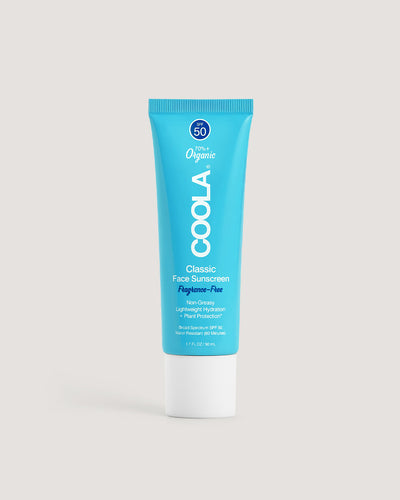
- The Fragrance-Free Face Sunscreen Lotion acts as an invisible shield against the sun and environmental stressors. This Farm to Face® formula combines sun protection with daily hydration. It provides SPF 50, UVA, and UVB protection while helping moisturize the skin. Formulated with our antioxidant-rich Plant Protection Complex®, this fragrance-free sunscreen feels light on the skin and layers easily under makeup.
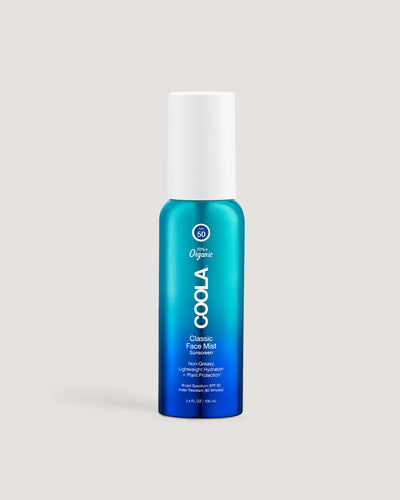
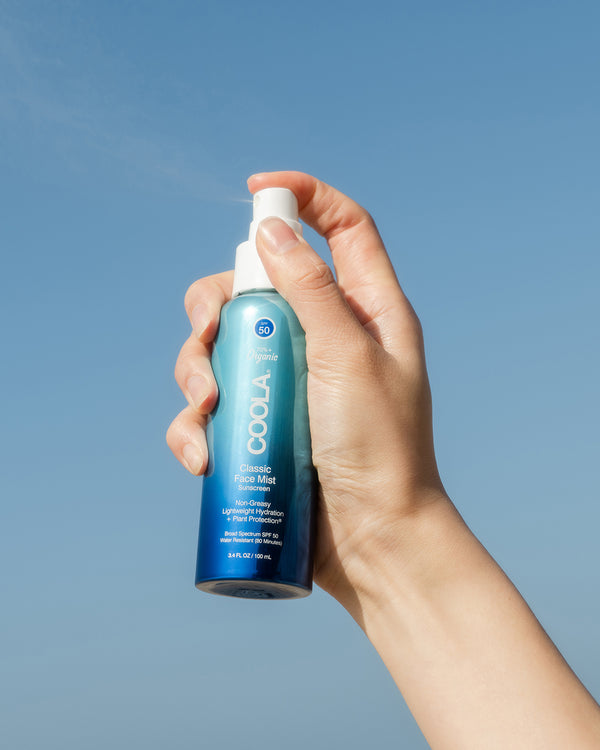
- The Sunscreen Face Mist is an easy-to-use organic face mist sunscreen that applies quickly. A couple of shakes and a few mists are all it takes. Featuring our Plant Protection Complex® with antioxidant-rich ingredients like Buriti Oil and Prickly Pear Extract, this lightweight sunscreen mist helps mitigate the effects of free radicals. It can be applied over makeup, on the go, or whenever you want to refresh your SPF.
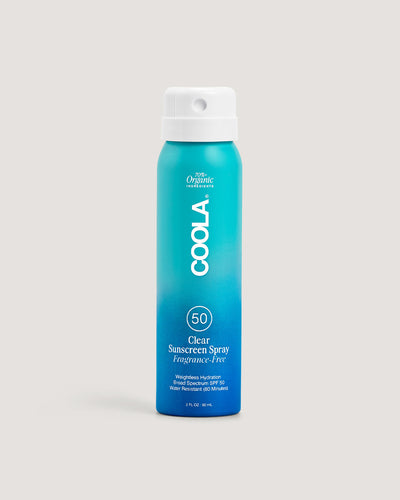
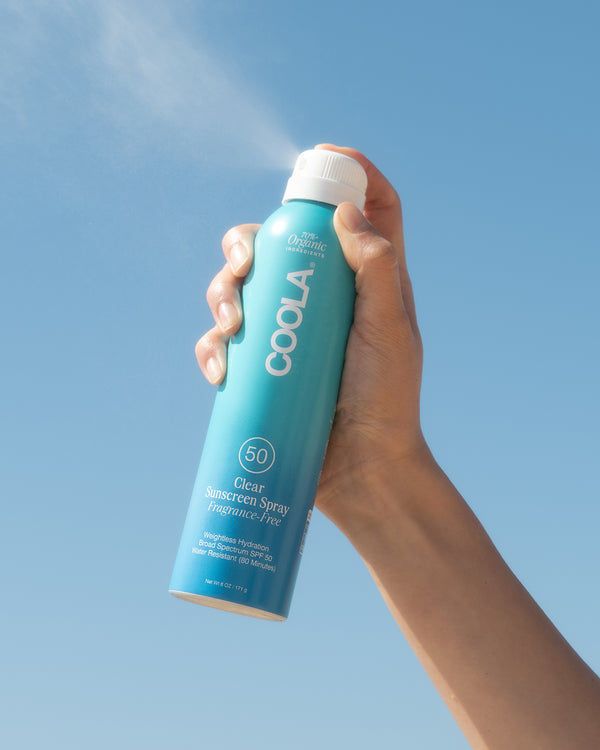
- The Fragrance-Free Clear Sunscreen Spray offers a modern update to our award-winning classic. It is designed for active days in the sun while remaining light enough for everyday use. This Farm to Face® formula features our antioxidant-rich Plant Protection Complex® to help mitigate the effects of free radicals while supporting healthy skin. The clear formula provides water-resistant SPF protection whenever you need it.
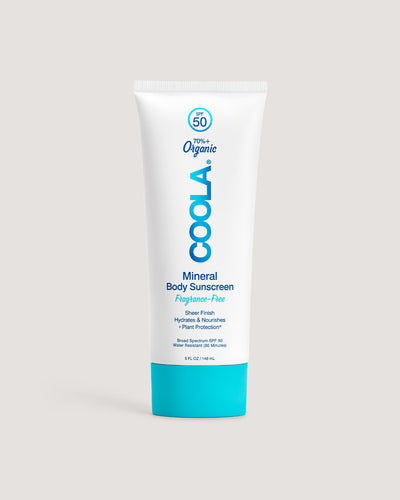
- The Mineral Sunscreen Body Lotion delivers the benefits of a mineral formula without the heavy white cast. Formulated with our Plant Protection Complex®, this water-resistant lotion uses non-nano Zinc Oxide to provide Broad Spectrum SPF protection. The texture glides on smoothly and feels lightweight while helping hydrate the skin.
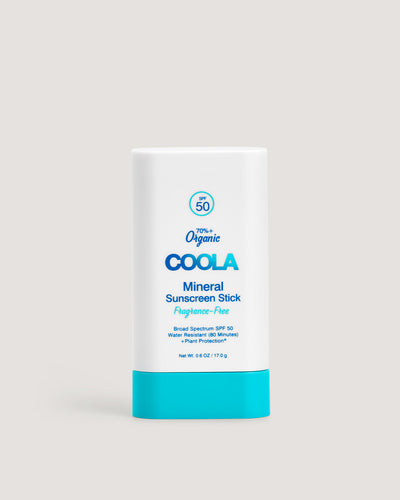
- The Mineral Sunscreen Stick is designed for convenient, mess-free sun protection. The sheer sunscreen stick glides on easily and helps defend skin while keeping your hands clean. It also contains plant-derived Oleosome Technology and our Plant Protection Complex® to help mitigate the effects of free radicals while supporting the skin barrier.
Choosing sunscreen with better ingredients
When selecting sunscreen, understanding what ingredients to avoid can make the process easier, especially if you have sensitive skin.
Avoiding commonly discussed bad ingredients in sunscreen, such as Oxybenzone, Octinoxate, and Retinyl Palmitate, may help reduce the chance of irritation and support a more comfortable daily SPF routine.
It is always a good idea to read ingredient labels and speak with a dermatologist if you have concerns about which sunscreen is right for your skin. With the right ingredients and the right SPF, you can enjoy time outdoors while helping defend your skin from the sun.
Sources:
- Suh S, Christine T.N. Pham, Smith J, Natasha Atanaskova Mesinkovska. The banned sunscreen ingredients and their impact on human health: a systematic review. International Journal of Dermatology. 2020;59(9):1033-1042. https://onlinelibrary.wiley.com/doi/10.1111/ijd.14824
- Hudspeth AJ, Zenzola N, Kucera K, Wu Q, Light DR. Independent Sun Care Product Screening for Benzene Contamination. Environmental Health Perspectives. 2022;130(3). https://ehp.niehs.nih.gov/doi/10.1289/EHP10386
Shop Our Featured Products